

17
Aug
Well Water and Your Kid’s Teeth: A Seasons Dental Guide for Cassia County Parents
If your home sits outside Burley or Declo city limits, your drinking water almost certainly comes from a private well, and nobody is testing that water but you. That one fact shapes how we plan cavity prevention for kids at Seasons Dental. Public water systems have to sample their supply and mail customers an annual report. Private wells fall outside those rules under the federal Safe Drinking Water Act, which leaves the fluoride level at your kitchen sink an open question until someone measures it.
Fluoride is a mineral that strengthens enamel while permanent teeth are still forming under the gums. Too little, and we see more decay. Too much during those same years, and children can develop faint white flecking on the enamel called dental fluorosis. Your number is what matters, not the debate.
Is there fluoride in Idaho well water to begin with?
Often, yes, and sometimes quite a lot of it. Fluoride occurs naturally in groundwater as it moves through volcanic rock and sediment, which describes most of the Snake River Plain. Two wells a mile apart can return very different results depending on depth and the aquifer they draw from.
For context, the U.S. Public Health Service set 0.7 milligrams per liter as the recommended level for community water systems in 2015. The EPA enforces a ceiling of 4.0 mg/L for health reasons and flags 2.0 mg/L as the point where cosmetic fluorosis becomes likely in children. Idaho wells show up on both sides of that range, which is exactly why guessing is a poor strategy.
How do I find out how much fluoride is in my well?
Send a sample to a state-certified drinking water laboratory. The Idaho Department of Environmental Quality maintains a public list of certified labs, and South Central Public Health District can point Cassia County families toward local options. The lab mails or hands you a sterile bottle with instructions on how to draw the sample, usually from an untreated cold tap that has run for a few minutes.
A single fluoride test typically runs somewhere in the $20 to $40 range, and most labs turn results around in about a week. Bacteria and nitrate are the two tests the CDC recommends every year for private wells. Fluoride is different. It comes from the geology rather than surface contamination, so one test is usually enough unless you deepen the well, drill a new one, or change the pump depth.
Bring a copy of the results to your child’s next visit. It takes about thirty seconds to read and it changes what we recommend.
What if the fluoride level comes back low?
Below 0.3 mg/L, the American Dental Association’s supplement schedule calls for prescribed fluoride drops or tablets: 0.25 mg daily from six months to three years, 0.5 mg from three to six, and 1 mg from six to sixteen. Between 0.3 and 0.6 mg/L, the doses drop and children under three need nothing. Above 0.6 mg/L, no supplement is indicated at all. These are prescription doses, so they get written after we see a test result, not before.
Supplements are only part of it. The U.S. Preventive Services Task Force recommends fluoride varnish applied to primary teeth starting when the first tooth erupts and continuing through age five, generally every three to six months depending on a child’s decay risk. Brushing amounts matter too: a smear the size of a grain of rice under age three, a pea-sized amount from three to six, with an adult watching so it gets spit out.
What if the level comes back high?
Skip supplements entirely and think about the water your youngest children drink. Fluorosis develops only while enamel is forming, roughly birth through age eight, and in the mild forms we usually see it is cosmetic rather than structural.
Standard water softeners do not remove fluoride, and neither do most carbon pitcher filters. Reverse osmosis and distillation remove the large majority of it. Boiling makes things worse by evaporating water and concentrating what stays behind. Mixing infant formula with reverse osmosis or bottled low-fluoride water is the usual adjustment.
What Seasons Dental checks for well water families
We ask every family whether they are on city or well water, because it changes the exam. For well water kids we look closely at the pits and grooves of newly erupted molars, watch for early demineralization along the gumline, and decide on sealants and varnish intervals based on what the water is and is not providing. Families who bring in a lab report get specific recommendations instead of general ones. You can find our full range of children’s services at Seasons Dental.
Test the well, keep the paperwork, and bring it with you. It is a small errand that tells us more about your child’s cavity risk than almost anything else we can ask about. Schedule a visit with Seasons Dental and we will build the prevention plan around what is actually coming out of your tap.
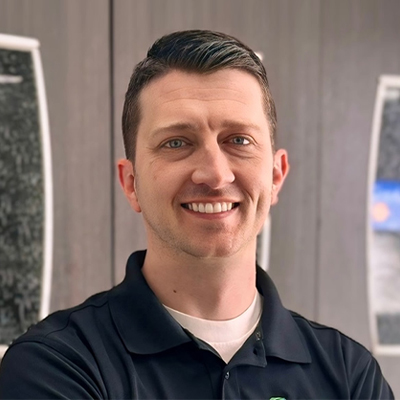
Chad Bodily, DDS
Connect on LinkedInDr. Chad Bodily, DDS, is a compassionate dentist with strong ties to the Mini-Cassia community. After graduating from Minico High School and serving a church mission in Portugal, he earned a bachelor's degree in Biology from BYU-Idaho and a Doctorate of Dental Surgery from the University of Iowa. Dr. Chad partners with his brother, Dr. Ty, to provide patient-focused care, treating everyone like family. Committed to professional growth, he is licensed in sedation dentistry, ensuring a comfortable experience for his patients. Dr. Chad values building strong patient relationships and considers his family his greatest joy and accomplishment.
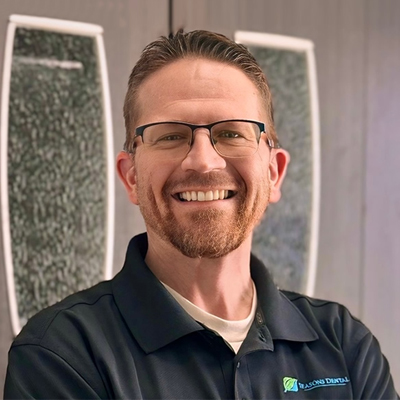
Ty Bodily, DMD
Connect on LinkedInDr. Ty Bodily, DMD, is a skilled dentist with deep roots in the Mini-Cassia area. A proud graduate of Minico High School and BYU-Idaho, he earned his Doctorate of Medical Dentistry from Nova Southeastern University in Florida. A highlight of his education was volunteering in Brazil, where he provided free dental care to underprivileged children. With post-graduate training from world-renowned experts in sedation, restorative, and cosmetic dentistry, he excels in reconstructing smiles, enhancing both health and self-esteem. Dr. Ty's passion for dentistry is matched only by his devotion to his family, whom he considers his greatest achievement and passion.