
26
Oct
Dip, Chew, and the Five-Minute Exam That Could Save Your Life
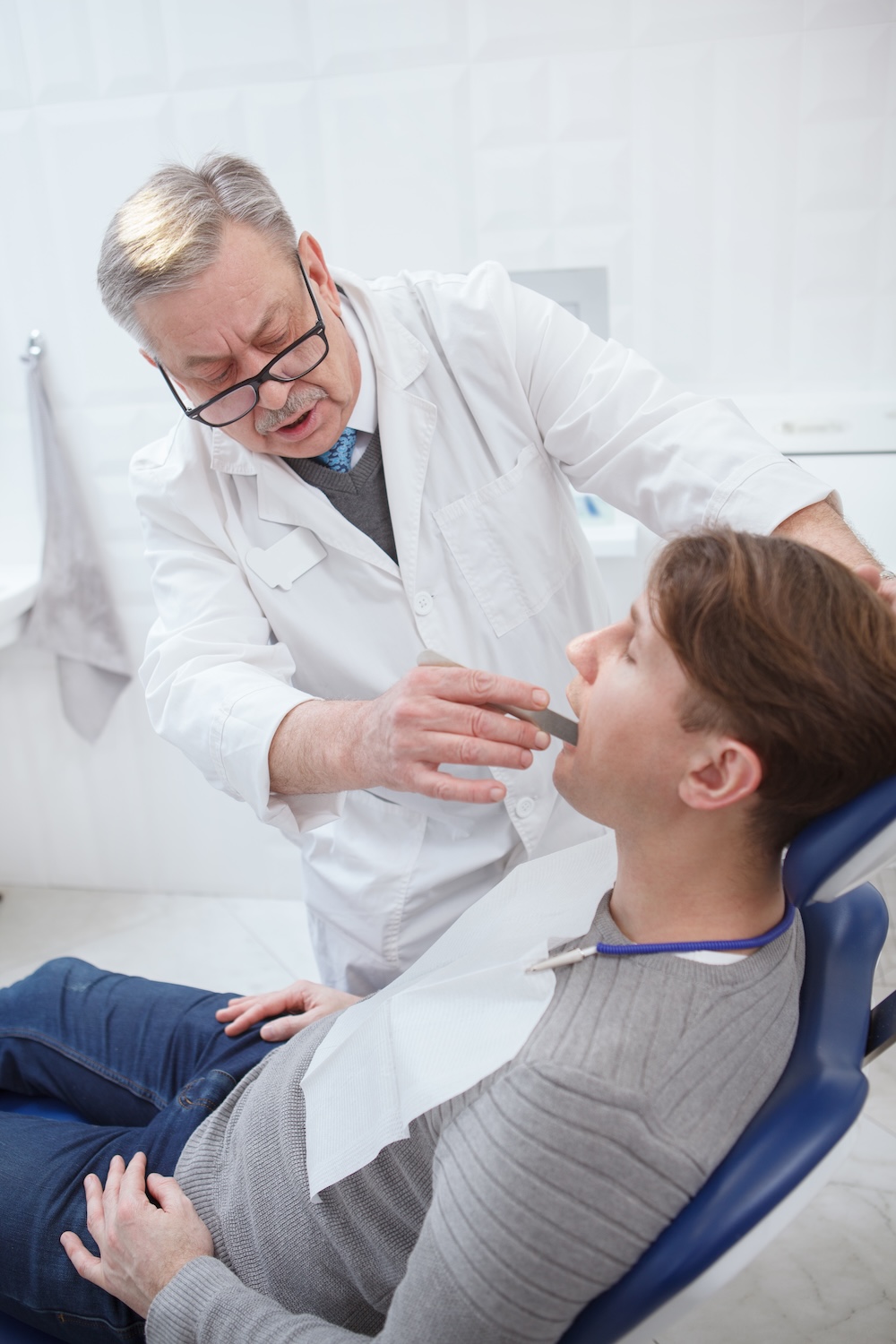
There is a part of your checkup at Seasons Dental you may not have noticed. Before or after the cleaning, we look over your lips, tongue, cheeks, palate, and throat, and we feel along your jaw and neck. It takes a few minutes and nobody talks much during it. That is an oral cancer screening, and for anyone who dips, chews, smokes, or drinks regularly, it is arguably the most important thing that happens during the visit. Most oral cancers are found by someone looking, not by the patient feeling something wrong.
What actually happens during an oral cancer screening?
A visual and tactile exam of the soft tissues in and around your mouth. We check the lips, the inside of the cheeks, the roof and floor of the mouth, the gums, and the tongue, including the sides and underside where problems most often begin.
We also feel along the neck and under the jaw for lymph nodes that are enlarged or firm. You may be asked to stick out your tongue while it is held with gauze, which is how we see the lateral borders clearly.
Nothing about it hurts, and it is already part of a routine exam at no separate charge in most practices.
What are we looking for?
Changes in tissue that do not belong and do not go away. The findings that matter most:
- A white patch that cannot be wiped off, called leukoplakia
- A red or speckled patch, called erythroplakia, which carries greater concern than a white one
- A sore or ulcer that has not healed
- A lump, thickening, or rough area
- Numbness, persistent one-sided ear pain, hoarseness, or trouble swallowing
- Teeth becoming loose without an injury, or dentures that suddenly stop fitting
A finding is not a diagnosis. Many patches and sores turn out to be irritation from a sharp filling, a cheek bite, or a denture edge. When something looks suspicious, the next step is usually a referral for biopsy, since tissue examination is the only way to know.
What is the two-week rule?
Anything in your mouth that has not healed in two weeks should be looked at. Normal irritations resolve in days. A canker sore goes away. A spot from biting your cheek goes away.
Something still present after two weeks is telling you it is not a simple irritation. That is the threshold worth remembering, and it applies whether or not you use tobacco.
Is smokeless tobacco safer than cigarettes?
It carries its own risks rather than being a safe alternative. Smokeless tobacco products contain carcinogens, including tobacco-specific nitrosamines, and health agencies including the CDC and the National Cancer Institute publish information on the associated risks to the mouth and throat.
The difference is where the exposure concentrates. With dip or chew, the product sits against a specific area of gum and cheek for long stretches, day after day, in the same spot.
What shows up before anything serious does?
Damage we see long before cancer ever enters the conversation, and it is usually at the placement site. Gum recession in that one area, exposing root surface that decays faster than enamel. A wrinkled, grayish-white thickening of the tissue where the product sits. Enamel wear from the abrasives, and decay from the sweeteners in many products.
The tissue changes at the placement site often improve or resolve if a person stops. That is worth knowing, because it means the damage is not necessarily permanent and the timeline for reversing some of it is shorter than people assume.
Who else should pay attention?
Tobacco is not the only risk factor. Heavy alcohol use raises risk, and the combination of alcohol and tobacco raises it more than either alone.
HPV has changed the picture considerably. Certain strains of human papillomavirus are associated with cancers at the back of the tongue and in the tonsil area, and these occur in people who have never used tobacco at all. Vaccination is recommended by health authorities and is worth discussing with your physician.
Farmers, ranchers, and anyone working outdoors in southern Idaho should also watch the lower lip. Sun exposure is a risk factor for lip cancer, and lip balm with SPF is an easy habit.
Does finding it early actually change anything?
Substantially. National Cancer Institute survival data show markedly better five-year outcomes for oral and pharyngeal cancers found while still localized compared with those found after spreading to lymph nodes or beyond.
The problem is that early lesions rarely hurt. Pain tends to arrive late, which is why the exam matters more than waiting to notice symptoms yourself.
What Seasons Dental does at every visit
We screen every adult patient at every checkup rather than only those who ask or who use tobacco. We document what we find so changes can be tracked between visits, and when something warrants a closer look, we refer rather than watch and wait.
We are also happy to talk about quitting without a lecture attached. Idaho offers free quit support through the state Quitline, and we can point you toward it.
If you use smokeless tobacco, or you have a sore or patch that has been there more than two weeks, get it looked at. Schedule an exam with Seasons Dental, and mention the spot when you call so we know to set aside time for it.
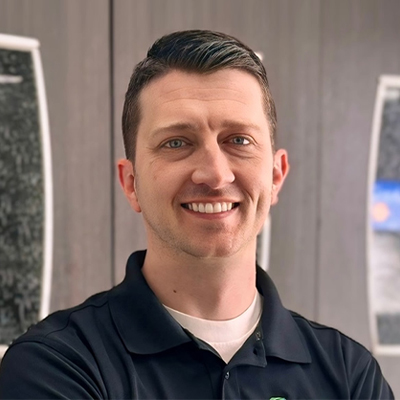
Chad Bodily, DDS
Connect on LinkedInDr. Chad Bodily, DDS, is a compassionate dentist with strong ties to the Mini-Cassia community. After graduating from Minico High School and serving a church mission in Portugal, he earned a bachelor's degree in Biology from BYU-Idaho and a Doctorate of Dental Surgery from the University of Iowa. Dr. Chad partners with his brother, Dr. Ty, to provide patient-focused care, treating everyone like family. Committed to professional growth, he is licensed in sedation dentistry, ensuring a comfortable experience for his patients. Dr. Chad values building strong patient relationships and considers his family his greatest joy and accomplishment.
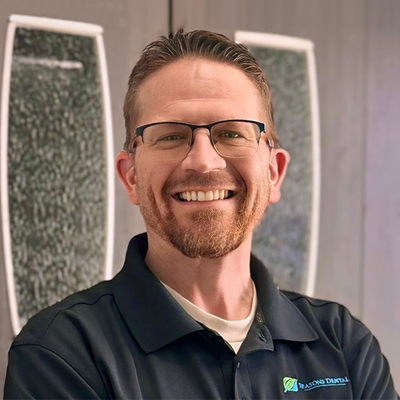
Ty Bodily, DMD
Connect on LinkedInDr. Ty Bodily, DMD, is a skilled dentist with deep roots in the Mini-Cassia area. A proud graduate of Minico High School and BYU-Idaho, he earned his Doctorate of Medical Dentistry from Nova Southeastern University in Florida. A highlight of his education was volunteering in Brazil, where he provided free dental care to underprivileged children. With post-graduate training from world-renowned experts in sedation, restorative, and cosmetic dentistry, he excels in reconstructing smiles, enhancing both health and self-esteem. Dr. Ty's passion for dentistry is matched only by his devotion to his family, whom he considers his greatest achievement and passion.