
05
Oct
Dry Mouth Isn’t Just Annoying: How Common Medications Are Raising Your Cavity Risk
Patients come into Seasons Dental every month who brushed and flossed the same way for forty years without a single cavity, and now they have four. Almost always, something changed with their medications. Dry mouth is the most underestimated cavity risk we see, partly because it feels like a minor inconvenience rather than a dental problem. Saliva does more work protecting your teeth than most people realize, and when it disappears, decay can move faster in two years than it did in the previous thirty.
Why does dry mouth actually cause cavities?
Because saliva is your mouth’s defense system, not just moisture. It neutralizes the acid that bacteria produce after you eat, and it carries the calcium, phosphate, and fluoride that repair early enamel damage before it becomes a hole.
Saliva also rinses. It clears food debris and bacteria off tooth surfaces continuously, and it contains proteins that keep bacterial populations in check. Take that away and the mouth stays acidic longer after every meal and every sip of coffee.
The result is not a slightly higher cavity risk. It is a different kind of decay, and it moves quickly.
Which medications dry your mouth out?
Hundreds of them. The National Institute of Dental and Craniofacial Research and other health authorities note that dry mouth is a side effect of a very large number of commonly prescribed drugs, which is why this comes up so often in a small-town practice where many patients take several.
Categories we see most:
- Blood pressure medications, including diuretics, beta blockers, and ACE inhibitors
- Antidepressants and anti-anxiety medications
- Antihistamines and decongestants, including over-the-counter allergy products
- Bladder control medications
- Muscle relaxants and pain medications
- Inhalers for asthma and COPD
- ADHD stimulants
The effect compounds. Someone taking one medication may notice nothing, while someone taking four or five often has significant dryness. Medical conditions including diabetes, Sjögren’s syndrome, and head and neck radiation cause it as well.
Nobody should stop or change a prescription because of this article. The productive conversation is with your physician, who may be able to adjust timing or consider an alternative within the same class, and we are glad to communicate directly with them about what we are seeing in your mouth.
Is dry mouth just a normal part of getting older?
No, and this is worth correcting. Aging by itself does not substantially reduce salivary function in healthy people. The reason dry mouth is more common in older adults is that older adults take more medications.
That distinction matters because it means the problem has causes worth investigating rather than something to simply accept.
What does dry mouth decay look like?
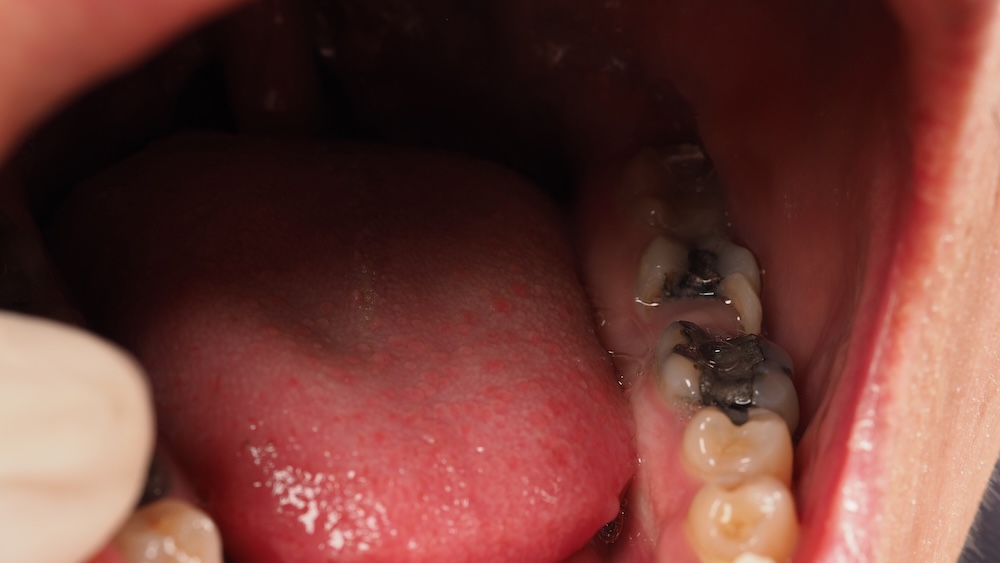
It shows up in places you may not be watching. Cavities in dry mouth patients tend to form along the gumline, on root surfaces exposed by recession, and around the edges of existing fillings and crowns.
Root surfaces are softer than enamel and decay faster once they are exposed. A patient with years of stable dental work can develop decay around several old restorations at once, which is often the first sign we catch.
Other things to watch for: a sticky feeling when you wake up, difficulty swallowing dry foods like bread or crackers, a burning sensation on the tongue, cracked corners at the mouth, dentures that suddenly will not stay put, or recurring thrush.
What actually helps?
Sipping water throughout the day is the foundation, and southern Idaho’s dry air makes that harder than it sounds. A humidifier in the bedroom helps overnight, when saliva flow is naturally at its lowest and when most dry mouth damage happens.
Beyond water, the measures that make a real difference:
- Sugar-free gum or lozenges containing xylitol, which stimulate flow and do not feed decay bacteria
- Saliva substitute sprays and gels, available over the counter, especially before bed
- Alcohol-free mouth rinses, since alcohol-based rinses dry tissues further
- Cutting back on caffeine, alcohol, and tobacco, all of which worsen dryness
- Avoiding constant sipping of sweetened coffee, soda, or sports drinks, which is the single fastest way to lose teeth in a dry mouth
Prescription-strength fluoride toothpaste is often the difference maker. High-fluoride formulations contain substantially more fluoride than what you buy at the store, and for a dry mouth patient that extra protection is frequently what stops the pattern.
What Seasons Dental does differently for dry mouth patients
We change the schedule and the prevention plan rather than just filling what shows up. For patients with significant dryness that often means shorter recall intervals, in-office fluoride varnish at each visit, prescription fluoride toothpaste for home use, and closer monitoring of root surfaces and existing restorations.
We also want to see your medication list, updated, at every visit. It tells us what to expect and when something changes, and it lets us coordinate with your physician rather than treating your mouth in isolation.
If your mouth has felt dry since a prescription changed, or you are suddenly getting cavities after decades without them, that connection is worth investigating rather than waiting for the next problem. Schedule an exam with Seasons Dental and bring your medication list with you.
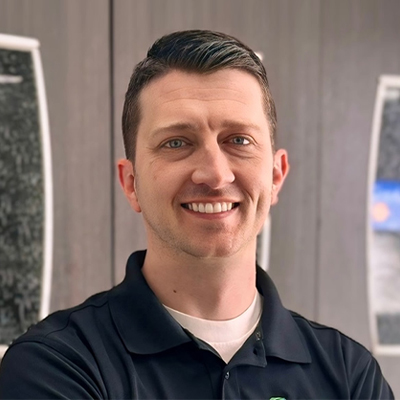
Chad Bodily, DDS
Connect on LinkedInDr. Chad Bodily, DDS, is a compassionate dentist with strong ties to the Mini-Cassia community. After graduating from Minico High School and serving a church mission in Portugal, he earned a bachelor's degree in Biology from BYU-Idaho and a Doctorate of Dental Surgery from the University of Iowa. Dr. Chad partners with his brother, Dr. Ty, to provide patient-focused care, treating everyone like family. Committed to professional growth, he is licensed in sedation dentistry, ensuring a comfortable experience for his patients. Dr. Chad values building strong patient relationships and considers his family his greatest joy and accomplishment.
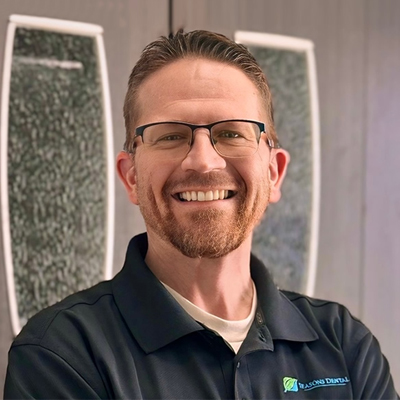
Ty Bodily, DMD
Connect on LinkedInDr. Ty Bodily, DMD, is a skilled dentist with deep roots in the Mini-Cassia area. A proud graduate of Minico High School and BYU-Idaho, he earned his Doctorate of Medical Dentistry from Nova Southeastern University in Florida. A highlight of his education was volunteering in Brazil, where he provided free dental care to underprivileged children. With post-graduate training from world-renowned experts in sedation, restorative, and cosmetic dentistry, he excels in reconstructing smiles, enhancing both health and self-esteem. Dr. Ty's passion for dentistry is matched only by his devotion to his family, whom he considers his greatest achievement and passion.